

Blog for Bikers and Patches
The Cheap Place is now a Wholesale Only Patch Store
As of January 8th 2026 TheCheapPlace.com will be a wholesale only website. While you can still buy one of each item from our store, there will be a $30 minimum order amount imposed on all orders.
You can shop any category of products at wholesale prices with or without a wholesale account. The prices of wholesale accounts and retail accounts are the same.
If you are interested in buying a single patch you may find our product listings on Amazon or Ebay. Just type IVAMIS and the model number on these marketplaces to find the patch you are looking for.
Keep in mind not every patch we have on our site is available at these marketplaces due to these marketplaces' policies on keeping snowflakes safe.
That time I sold patches on Tiktok Shop
Back when I started thecheapplace.com I had zero intentions of trying to sell my patches on other people’s websites (now called marketplaces). The strategy at the time to be successful online was to dominate google’s search results for the things you were selling. Back then they showed you ads on the far right column of their search pages and no one ever paid attention to them. Quite different to what you see now with organic results suppressed way below anyone is interested to scroll down to.
Nowadays Google is all about pay to play instead of showing the most relevant results to its customers like it once used to. And they’ve been making that “sponsored ads” notice they put on their paid results ever so subtle, looking almost like an organic search result. Back in the day ads were placed on a different column on the right side. They had a different background color. It made it easily for anyone to just say screw those ad results I want to see who is ranking at the top naturally (organically). Few years goes by and the ads move from a right column straight onto the top of the organic results but they are still kept a different background color to very easily identify the ad and look over it to the first organic result. At least that was my habit way before I even started selling online. You just skipped the obvious ads on Google and went straight to the first guy that ranked at the top because google’s search algorithm thought you were the best at it.
Remember google didn’t become a search powerhouse by showing you the best ads. They had an algorithm that provided the most relevant results for whatever you were searching. You didn’t go to google, to check out their irrelevant ads, you went there to search, who was selling “biker patches”, and you knew the natural results meant you found someone google thinks is the best.
Google’s organic search results were conquered by websites creating new content relevant to the search terms someone was searching for. If you had a lot of 'biker patches' on your site and other people were linking back to your site, you ruled the top of the organic search results.
But who could compete with the fresh content provided to Ebay and Amazon by new sellers joining it every day. It wasn’t long, before Google's organic search results started getting flooded by search results from a handful of companies such as Ebay, Amazon or Etsy. All of a sudden you had to join these marketplaces to have any online visibility.
The online surfer, who used to go to Google to find something they were looking for, was only seeing a handful of websites in the meaningful search results. What do I mean by meaningful? In online search if you are not #1 on the list, you are 90% nothing. And if you don’t rank #2 or #3 you simply don’t exist to the 99% of the people searching for something you might be specializing in.
When the top 3 sites for any generic keyword search on google became either Amazon, Ebay, Pinterest, Walmart or Temu, eventually people realized if they want to find a product they can go to Amazon or Ebay and search for it there instead of visiting google first.
I mean once you are hooked onto Amazon with everything you can find along with a free shipping and return option you don’t really go to google to search for something you want shipped to you. You go to Amazon. And this is all thanks to the millions of sellers who joined amazon long before they became the dominant powers. That incoming fresh content from it’s users (who were knows as sellers) gave them the ability to constantly beat any average joe to rank organically on top of google.
Now everybody who wants to have something delivered to their home shops from Amazon. Perhaps except for the few that avoid it because of a disgruntle they had with Amazon. I mean come on, the stuff arrives the next day, why else would you not order from them unless you can’t find it On Amazon or it's cheaper somewhere else. But Amazon makes sure they have the lowest price for it. In fact they bully companies to match their websites prices to their Amazon listings.
Habits change, things change. Now sites like ours are invisible unless you want to spend on ads that cost more than the sales you would ever make. Don’t think we didn’t try it. Google Ads. Spend $100, make a $100 is what we got. This left us no choice but to start listing and selling our products on different marketplaces like Amazon, Ebay, Etsy, Walmart and Tiktok.
Selling on Tiktok was an unbelievable experience. The unbelievable part is the way they closed our store. Not because of something we were doing wrong, but entirely because of a failure on their end to confirm our identity. One day we get an email saying you have to confirm who you are. And so we do, we create a video of me holding up my drivers license showing the back and front of it, showing them the products we sell and send it in.
We get a response. Sorry it wasn’t clear do it again. I recreate the same video showing my ID again, showing my Passport, stating my name and business and showing them what I sell and I send it to them again. We get a another response. Sorry it wasn’t clear, you can’t appeal this decision we are disabling your store due to this violation.
So they suspend our selling abilities on our store. I have no course of action. I create tickets sending them another video, they state they will get it to the right team and restore our selling abilities on their site, they then turn around and come back and say their decision is final and they can’t restore our selling abilities.
I start to think I’m just receiving AI responses that don’t make sense. A human being could easily watch the identification videos and see everything is clearly shown as requested by them. I proceed to click the “Close Store” button to end my venture with Tiktok and cash out the small amount of money they owe me. What do you know, they made it impossible. I click close store, they say in order to close the store you have to solve the violation in your account. Mind you the violation is ‘not providing clear identification”. Which I had done 3 separate times. I create a ticket with them and I get back into the same loop of AI nonsense responses on how I need to fix a violation first which has no recourse on how to fix because it says I cannot appeal to this violation again.
I can’t fix the violation, I can’t close my store and cash out. That is where it ended. Well did you try again? Give me a break, I won’t waste another minute of my life going through the same loop they sent me through. Most likely the loop is designed on purpose to make you give up and say Fuck it. Well Fuck it, it is, Beware before you do the same mistake as I did and waste time creating a store and listing your products on it. A day might come they just suspend your store because they blatantly lie and say the identification video you sent them wasn’t clear enough when it is completely legible.
What is there left to do? Keep creating tickets. I did look into a corporate address, a corporate phone number. Anyone to call. It'a a big secret, there is no way to contact anyone on Tiktok except to create a ticket and I know where that leads to, An endless loop. Trust me it's dangerous to your mental well being dealing with what they call online support.
Next time I will talk about our Amazon seller experience in more detail. I want to prepare you for What a mental health hazard it is to sell on Amazon.

New Skull and Eagle patches have come in today
We received 3 new designs this week. All creations of Arturo Vilmenay. Nothing AI about any of these designs. Two of them, the Spider web and piston skulls AND the Flaming Skull come in large and small sizes. We will most likely make the flaming eagle in a larger version as well, currently only a small 4 inch version has come in. I hope you enjoy the new patches and snatch them up at half price by getting 10 or more patches.
Free shipping is back for the holiday shopping season for retail orders
While we are strictly against the concept of free shipping as it makes the base price for our products higher we do understand that it is customer psychology that free shipping is good. When in fact there is no such thing as free shipping, it is just embedded in the price.
We are going to test to see if free shipping is going to make a difference in our ever so declining sales on our site. Don't worry we are not raising prices. We are just eating the cost of shipping to see if things will improve. But let me warn you, it's going to be difficult for you to qualify for that free shipping. You think you would just buy 10 patches and get it? No no. Because when you buy 10, you get 50% off which knocks your total down to $25. So yeah be generous and think of your friends and family when placing an order. You are going to need to gather around 21 patches to hit that $50 free shipping buffer. But don't worry we have plenty to choose from.
Our Amazon channel is doing great, Ebay Etsy and Walmart channels are beginning to grow very slowly and our site is just constantly being pushed out of search results. Who are we to compete with the sweet deals Google strikes with big spenders like Ebay or Amazon. Ranking organic is no longer the same either. You would be lucky to see an organic search result on the first page. Almost everything is stuffed with ads. And we tried the ads. All we were doing was working for google. Online visibility of small timers like us have dwindled down to non existence. You just have to sell on big marketplaces to have any sort of sales to keep the guys busy at the warehouse. And one marketplace in particular must be struggling with keeping investors interested as they are sticking it into sellers without any lube these days. I'll rant about our Amazon seller experience in the next coming days. Wishing everyone a wonderful holiday season, enjoy Shipping on us when you spend $50 or more on your retail orders. And get 50% off the prices you see by simply buying 10 or more items, which can be different items. They don't have to be the same. And the best thing you can do for us is to tell your friends that there is a cheaper alternative to buy your patches online other than Amazon or Ebay. Not only it's cheaper but the selection is larger. You would be surprised at all the patches we carry here that we simply aren't allowed to list on those market places. As always RIDE SAFE!
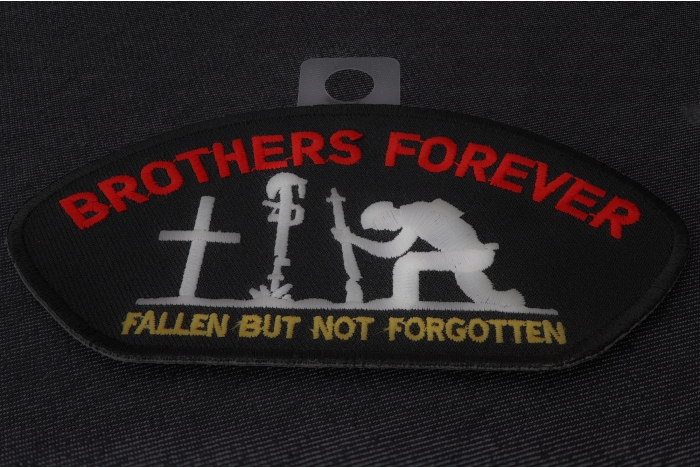
Wishing our Vets the Best. Happy Veterans Day
On this Veterans Day we pause to honor the courage, sacrifice, and unwavering dedication of every American who has answered the call to protect our freedoms. Your bravery in the face of danger, your willingness to leave families behind, and your steadfast commitment to duty have forged the peace we enjoy today. We are deeply grateful for the countless hours you have endured, the hardships you have faced, and the honor you have upheld. May your stories inspire future generations, and may we never forget the price of liberty. Thank you for your service, your sacrifice, and your enduring spirit.
New Patches are in this week
21 new saying patches, mostly funny trending memes of late 2025. Prices are defying inflation. Don't just buy them for yourself, get your friends some. Save fiddy percent when you mix 10 different ones. That's $2.50 a patch.
Add